
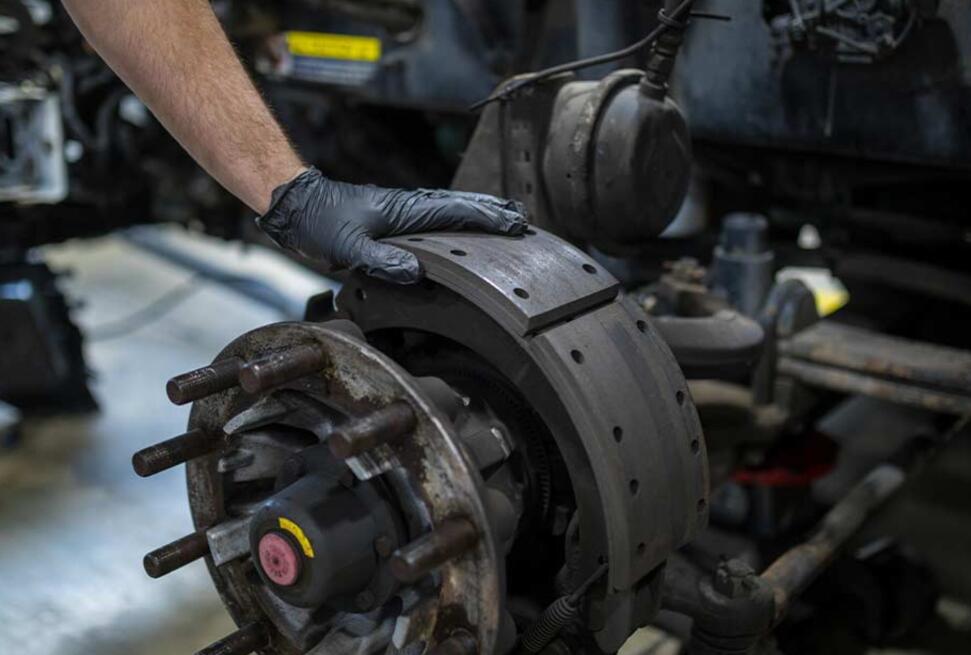
Brake systems on semi trucks endure far more stress than those on passenger vehicles. Between heavy loads, long hauls, frequent stops, and varied terrain, semi truck brakes experience consistent wear that requires expert attention. Understanding how brake wear develops, and what technicians see most often, can help truck drivers and fleet operators make informed maintenance decisions, improve safety, and reduce costly downtime.
Knowing what causes brake wear on semi trucks, what technicians look for during inspections, and when semi brake repair becomes necessary can help prevent safety issues and unplanned downtime.
What Causes Brake Wear on Semi Truck Brakes?
Semi truck brake wear is influenced by a combination of mechanical, environmental, and operational factors. Unlike car brake systems, heavy-duty brakes are designed to handle extreme loads and heat, which accelerates wear when conditions aren’t ideal.
Heavy-duty technicians most often point to:
Consistent heavy loads that increase stopping force
Frequent braking in urban routes or congested corridors
Heat buildup from long downhill grades
Improper brake adjustments or uneven air pressure
Worn components interacting with newer parts
Because semi truck brakes operate as a system, wear rarely affects just one component - it often signals a broader service need.
Common Brake Wear Patterns Heavy-Duty Technicians Identify
During inspections, heavy-duty technicians frequently find uneven brake shoe or pad wear caused by alignment or slack adjuster issues, along with glazing or cracking from excessive heat during sustained braking. Scored drums and contaminated brake components are also common, particularly on high-mileage commercial trucks operating under heavy loads. At Birmingham Freightliner, technicians regularly identify these brake wear patterns during routine service inspections, allowing drivers and fleets to address issues early with the right level of semi brake repair before safety or performance is impacted.
When to Replace Brakes on a Semi Truck
Knowing when to replace brakes on a semi truck is critical for safety and compliance. Brake components should never be run to failure, especially on commercial vehicles operating at highway speeds and maximum weights.
Technicians typically recommend replacing brakes when:
Brake lining thickness reaches minimum specifications
Stopping distances noticeably increase
Brake noise or vibration becomes consistent
Inspection reveals heat damage or structural wear
Proactive brake replacement helps avoid roadside breakdowns, failed inspections, and unplanned downtime.
Signs You Need Semi Brake Repair Before It Becomes a Safety Issue
Not all brake issues require full replacement, but early semi brake repair can prevent more serious failures across the braking system. Even when stopping power feels acceptable, underlying issues may already be developing.
Common signs that semi brake repair may be needed include:
Pulling to one side during braking
Air pressure inconsistencies or slow system response
Reduced braking responsiveness under load
Warning lights or failed inspection alerts
At Birmingham Freightliner, our elite service support teams help drivers and fleets evaluate these warning signs through inspections and diagnostics, ensuring brake issues are addressed early - before they impact safety, compliance, or uptime.
Why Professional Semi Brake Repair Matters More Than Passenger Vehicles
Semi truck brake systems are far more complex than passenger vehicle brakes, relying on air brake systems, multiple axles, and heavy-duty components designed to manage extreme loads and long stopping distances. Because these systems operate under strict federal safety requirements, worn or mismatched brake components can affect overall braking performance across the entire truck.
Professional semi brake repair goes beyond replacing worn parts. It includes verifying that brake shoes, drums, air system components, and related heavy-duty parts are properly matched, installed, and adjusted for commercial use. Access to the right replacement components - such as those available through Birmingham Freightliner - helps ensure repairs support long-term reliability and safety.
Proper semi brake repair typically includes:
- Accurate diagnostics using commercial-grade equipment
- Correct adjustment across all axles
- Verification that installed brake components meet DOT and manufacturer standards
This level of service supports consistent braking performance and is essential for both owner-operators and fleet-managed trucks.
Heavy-Duty Brake Service You Can Trust
At Birmingham Freightliner’s Birmingham location, experienced technicians work with semi truck brakes every day, from identifying early brake wear to completing full brake repairs and replacements. For drivers and fleets operating beyond Birmingham, the same level of heavy-duty brake service and technical support is available across all Birmingham Freightliner locations, making it easier to keep trucks road-ready wherever service is needed.